
Stanbic Uganda Holdings Limited has reported strong financial results for the year ended 31 December 2025, with shareholders set to receive Shs 360 billion in dividends, highlighting the Group’s sustained growth, disciplined execution, and resilient business model.
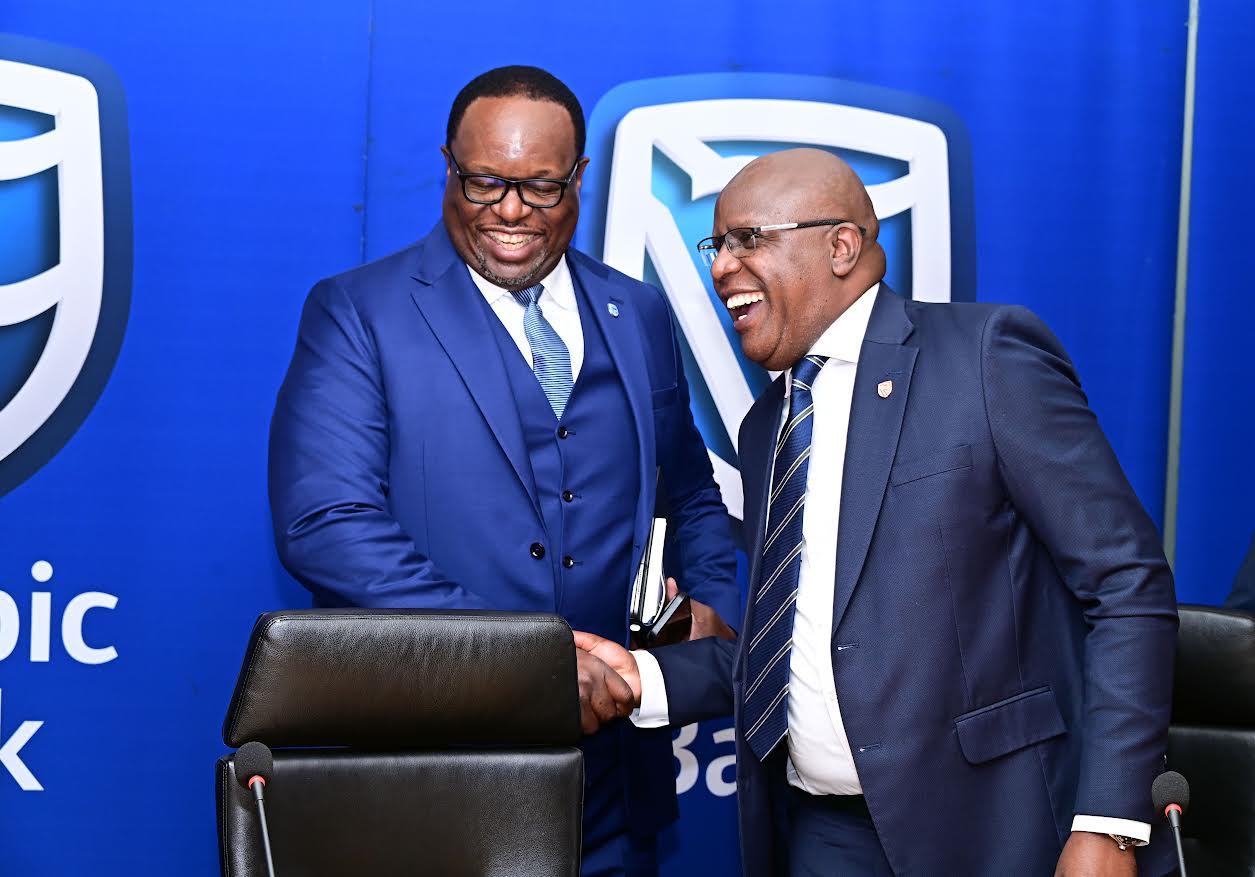
The results mark a significant leadership transition, with outgoing Chief Executive Francis Karuhanga closing his final year on a high, while Mumba Kalifungwa delivered a confident first year leading the banking subsidiary—the Group’s core business.
Stanbic’s performance was supported by an improving macroeconomic environment. Uganda’s economy grew by 6.3% in 2025, up from 6.0% in 2024, driven by easing monetary conditions and renewed investor confidence. Inflation remained stable at 3.6%, while the Central Bank Rate moderated to 9.75%. The Ugandan shilling strengthened to an average of Shs 3,600 per US dollar, compared to Shs 3,755 in 2024.
Despite ongoing fiscal pressures, positive progress toward first oil production boosted market confidence in Uganda’s medium-term growth outlook.
Delivering Consistent, High-Quality Growth
Stanbic delivered a balanced performance, combining revenue growth with strong cost discipline. Revenue rose by 11%, while the cost-to-income ratio improved to 47.1%, remaining below the 50% benchmark.
Return on equity increased to 26.8%, well above the Group’s 20% target, translating into a net profit of Shs 591 billion, up 23.6% from Shs 478 billion in 2024.
Investor confidence remained strong, with the share price rising 89% over three years to close at Shs 60 as of December 31, 2025.
“Our robust earnings of Shs 591 billion and a return on equity of 26.8% reflect the strength of our strategy and our focus on delivering long-term shareholder value,” said Francis Karuhanga.
The Group’s results were driven largely by Stanbic Bank Uganda. In his first year as CEO, Mumba Kalifungwa oversaw strong balance sheet growth, with customer deposits increasing by 13% to Shs 8.0 trillion, net loans and advances growing by 16.4% to Shs 5.1 trillion, and revenue rising by 11% to Shs 1.4 trillion.
“This performance reflects the collective effort of our people and the trust of our clients,” said Mumba Kalifungwa.
Chief Financial Officer Ronald Makata highlighted the Group’s solid financial position. Capital adequacy remained strong at 23%, well above the 12% regulatory requirement, while asset quality stayed robust with a non-performing loans ratio of 1.7%, significantly below the 7.5% risk threshold. The credit loss ratio improved further to 0.4%.
Liquidity levels were also exceptionally strong, with a liquidity coverage ratio of 354%, more than three times the regulatory requirement, and a net stable funding ratio of 176%, reflecting a stable and well-diversified long-term funding base.
“Our balance sheet strength and disciplined risk management position us for sustainable growth,” said Ronald Makata.
Looking ahead, Stanbic reaffirmed its commitment to inclusive growth through its Positive Impact agenda, approved in 2025, as it approaches 35 years of operations in 2026.
The initiative focuses on advancing financial inclusion and access, supporting enterprise development and job creation, financing integrated infrastructure, enabling climate resilience, and deepening corporate social investment across youth entrepreneurship, maternal health, and environmental conservation.
“Uganda is our home, and we are committed to driving growth that is inclusive and sustainable,” said Mumba Kalifungwa.
This strategy aligns closely with Uganda’s national development agenda for 2025–2040.
